Several Western news resources like to announce in their titles that China or that Japan has raised their military budget again. They make it sound as if these countries would be getting ready for war (it is always left open with whom). But this is a mistaken impression they create. The news are not fake: usually the data is in the articles. However, the tone of titles and their wording is obviously misleading. And the data is usually not presented in comparison with relevant trends and info, so it looks scarier than it is.
So, some basic numbers. Most of the following come from the Stockholm International Peace Research Institute (SIPRI) which is nicely compiled on wikipedia, and also links to the original.
Biggest spenders
At the moment the biggest spender is the US, the second is China, third Saudi Arabia, followed by Russia in the fourth place. Then we have India, the UK, France, and Japan in the 8th place. Germany and South Korea make up the top ten.
GDP relative spending
In terms of GDP the US and China are the biggest economies in the world. Japan follows in the third place, Germany fourth. So Japan and Germany place much further back, they spend much less relative to what they have, than many other countries.
To look at some numbers
the US spends 3.1% of its GDP
China 1.9%
Saudi Arabia 10%
Russia 4.3%
India 2.5%
UK 1.8%
Japan 0.9%
Germany 1.2%
This indicates which countries place a huge emphasis on developing and maintaining their military strength.
It is of course influenced
1) by how risky the country's environment is (but then Japan's should be much higher of course),
2) by how big the country's GDP is (the UK's 1.8% is just a bit bigger than Japan's 0.9% for example), and
3) by local prices (China can pay much less for most military personnel and products because labour costs are lower and many corporations are fully or partially state owned).
Political factors
In some cases the spending is just defense oriented, in some cases it is upkeep and development oriented, and in some cases it is potentially (or very likely) aggression oriented.
For example much of Germany's spending simply goes to upkeep. Japan is developing a good deal this year, but this is mostly defense oriented: since China and Russia, its giant neighbours, are upgrading and developing their military very fast Japan needs to spend on defense. The USA, China, Russia and Saudi Arabia are developing attacking capabilities, spending great amounts on research and new weapons (both development and purchasing).
Of course all countries look at their own safety, but with some we also know that they have territorial ambitions (China has asserted its claim to Taiwan and the South-China sea, so its preparing to fight if others don't simply allow it to capture those territories).
Real terms
It is also important to look at spending in real terms. That is, how much actual money has been spent. The top three are the US, China and Saudi Arabia.
The US has spent 610 billion US dollars (same for all others: billion USD)
China 228
Saudi Arabia 69.4
Russia 66.3
India 66.9
France 57.8
UK 47.2
Japan 45.4
Germany 44.3
South Korea 39.2
In this light we can see that the US surpasses by far all of the others. However its forces are spread out all over the world. China's and Russia forces, although seemingly cheaper, are much more concentrated which might mean that they are stronger in some locations.
It is also telling that the three biggest Europeans don't spend together as much as China.
Japan doesn't spend much more than South-Korea and already that is controversial with voters and opposition politicians. Both Japan and South-Korea have US forces stationed within their borders and could - hopefully, but who knows with Trump - count on the US's support in case of aggression. Still, one wonders whether they shouldn't build up their own, homegrown industry more in the current climate of an expansionist China, and an assertive Russia.
Rise in budgets year on year
This is important because it shows how much need the countries see there is for development. This can reflect worries about their neighbours or rivals, as well as intentions to turn to the offensive.
I didn't look that much into the data on this front but the numbers on the US, China and Japan have been much commented on, so it is easy to have. Again, it is characteristic of reporting that the enormous raise in the US budget is discussed, but usually in fairly realistic terms. I think this is fair, given that the US is in a competition for hegemony in many areas with Russia, China, in West-Asia, in the Arctic, and increasingly also in Africa. This might be morally wrong - as most military building is - but strategically necessary - because if the US would behave better that wouldn't mean the two other superpowers would stop misbehaving.
Anyway, the reported number is 10%, which is "huge" as one guy likes to say.
The reporting on China and Japan has, as usual, been much more alarmist. The funny thing is that both follow trends and both could be anticipated, so, shouldn't be very surprising. Also, from a strategic point of view maybe the Japanese budget doesn't make that much sense - why don't they increase a lot more!? - but the political situation and Japan's foreign policy makes sense of this too - Japan places emphasis on international law, economic relations and rejects employing offensive weapon system, despite all the panic and fear mongering to the contrary that we saw in the Chinese and US media. (The Guardian published a refreshingly well-contextualised short piece on this one.)
China's spending is now officially around 175 billion USD but expert estimate it to be around 225-230b USD actually. Sadly their budget is notoriously secretive. Not even citizens can access it.
This means a raise of 8.1% from last year's spending.
China likes to point out that in terms of GDP their spending has been decreasing. This is just smokescreening of course: its true, but the real numbers, the actual amount has still been rising fast, since the economy grew so much in the last 30 years.
This is in line with their enormous military capability build up. We see that China is getting bolder and bolder. Earlier its goal was just to have sufficient defense against its immediate neighbours (India, Russia). Recently it also tries to dominate its smaller neighbours (Vietnam, the Philippines, Indonesia, Nepal, Thailand) and threaten seriously Japan and South-Korea. It also asserted that it claims Taiwan and the South-China Sea, so, it needs to be able to deny access to these areas to the US military stationed in East- and South-East Asia, and it also needs to be able to counter a possible reclaiming attack. The numbers make sense in this light. Of course that they make sense doesn't mean that they are morally or politically encouraging. China is on the road to aggression under Xi's leadership, and this should worry all of us. Maybe a leadership change would help.
Japan's spending was raised by 2.5%. Yup, this is what the big excitement is about. (Up next! Another RECORD setting 2.1% raise is in line! Notice that almost all the titles use the word 'record. I know its a hard fight out there for readers but this is just ridiculous.) This is in line with their policy to pursue diplomacy and rely on the international legal tools and organizations rather than military pressure. Japan has been following this policy coherently since the end of WWII, so for more than 70 years. Abe is possibly the most hawkish and influential prime minister since the 1960s and still, Japan didn't turn into an aggressor, no matter how much the Chinese media would like to portray him like that. And of course the Japanese spending is still eminently transparent, as it should be in a democracy.
So, think a bit, look into the context and don't judge too quickly when you see a title and a few numbers. Yes, there are rising tensions, yes there is a buildup. But no, no one is going to jump against the others' throat in the next year or two, and no, Japan is not turning into an imperialist superpower again. China is still a long way from contesting US dominance on a global scale, but it can do this already in the local theatre of operations (or war, if there will be one). Russia maintains high spending, Saudi Arabia is building up like crazy, and Europe is maintaining a sensible apparatus.
Showing posts with label China. Show all posts
Showing posts with label China. Show all posts
Sunday, 2 September 2018

Tuesday, 21 August 2018
Good explanation of why Trump's North-Korea posturing was inefficient
Trump tried to appear as if he would call the cards in the issues around North-Korea. But of course anyone worth their salt knows that the two Koreas, China, Russia and Japan are the main players on this one. In fact, mostly the two Koreas and China. The question is whether South-Korea is willing to change long-term strategy and integrate more into the East-Asian order, and accept the lead of China, in exchange for peace and more cooperation or even unification with North-Korea.
See this detailed, readable and clear analysis in Paste Magazine for more.
See this detailed, readable and clear analysis in Paste Magazine for more.
Monday, 20 August 2018
Saudi meddling and flexing against democratic countries
The EU has a tough time due to what is called the 'migration crisis'. In reality there isn't any crisis. Criminal statistics didn't become much worse. Most criminals are still homegrown, even in France or Germany. The US right wing propaganda machine tried to cook up some stories of doom but they have been debunked in every case easily.
The interesting aspect of migration is not that it caused any serious problem. It didn't.
The interesting aspect is that it gave ammunition to EU skeptics to create a hot-issue out of a non-issue. It also provides ammunition to enemies of Europe, like the US, Russia, China, and less often mentioned but just as important: the West-Asian and Middle-Eastern countries. The chief among these are of course Iran and the Saudis. They are enemies on several fronts, but weakening Europe is a goal for both of them.
There has been a steady influx of money and intellectual support for right wing radicals and euroskeptics like Nigel Farage, Marie LePen, and Viktor Orban. These people are criticising migration while benefiting from dirty oil money. A sad state of affairs.
Saudi Arabia is also trying to flex and meddle in the larger games. The last instance of this came previous week: they jailed another human rights activist. As usual, they did so on the grounds of some ridiculous charge. Canada raised its voice. The Saudi's are now threatening to push back with severe economic retaliation.
Canada and Australia as countries with relatively smaller population are sensing a danger that the US and the EU is mostly trying to neglect now: that a large Chinese investment and the need to cooperate with Middle-East/West-Asia brings with it a lot of political pressure. These countries try to gain political legitimacy for their flawed, dictatorial autocracies in exchange for investments. Of course compromising the workings and institutional system of one's democratic country in exchange of short term benefits is horribly short sighted. But we see this plenty of times in case of the US and EU countries. Canada and Australia are already under more pressure and have luckily chosen to push back. Sadly some money-eyed people are too happy to give up on any values quickly.
It is remarkable that the US didn't support Canada. It shows that Trump doesn't care about human rights, and the US in general wants to keep Saudi Arabia as a partner in the region to pin down its weight in the long run against the aggressive Russian proxies and the encroaching Chinese.
The Saudis are enjoying this change of approach from their US supporters - Obama was much stricter regarding such issues, at least in his rhetoric if not in deeds - and are now testing the waters further. They don't even shy away from spreading outright lies. Is anyone going to raise their voice in defense of the Canadian side? Or are democratic countries now too afraid that if they are critical cronies like the Saudis will turn to the Russian or the Chinese?
It seems that so far except of some international organisations everyone is keeping their mouth shut. The Saudis have oil, have money, and have a very large modern army too.
The sad thing is that being amicable with them and refraining from calling out their inhuman and backwards laws will not benefit anyone. If Russia or China pays more they will work with them. The EU and the US are fooled, as they have been several times in the last years. Instead of standing up for good things, they are too conciliatory for gains which will not materialise.
The Saudis are using the same kind of illegal play in stoking fears about migration to raise skepticism about the effectiveness of the EU, thereby damaging the unity of Europe, and making it easier for them to pressure countries in one-on-one deals and relations.
Its just gonna get worse. The US is getting panicky under Trump. There is no long term vision just imminent action. Who knows what the consequences will be. The EU is still not nearly as unified as it should be.
Tuesday, 14 August 2018
Our new feudal realms - part 1
Two years ago I wrote a post that showed how we are lapsing back into feudalism. Extremely wealthy elites of professional, life-long reigning politicians and born-rich business and land owners have an enormous influence. They decide what happens in politics. These people are not members of a single nation. There are rather interests groups of them who work together. There are a few such groups in the US, in China, in the EU, in Russia and in most countries.
These people have figured out how to exploit democratic institutions for their own purposes. They rely on expert PR teams, lobbyists, spin doctors, rich supporters who own media outlets and links with the military. Most of these folks are motivated by money, or by ambition, or by a belief that they are the best for the world. Or a mixture of these. None of these delusions are true.

Some evidence would be nice you say?
China made Xi Jinping lifelong head of the party and the country. This is tragic. China was in a chaotic and exploited situation at the end of the imperial system around 1910. The abolishing of the old system was followed by almost 40 years of bloody civil wars between local warlords, strongmen, the communists, and the republicans. The British, the French, the Americans, the Russians, German, Dutch, and the Japanese all used this upheaval to push their influence on the country.
Maybe China went then the right way, maybe it didn't. But at least it abolished the single-person rule system, it became a strong free state, and had decent, stable government. The lack of human rights, of free speech, of accountability and transparency is tragic and horrible, as is police and party brutality. Add to this military aggression. Still, for the average Chinese citizen things were better than before.
This period is over. The country is back to the old system. Communism effectively was turned into a one-person lad dictatorship again. A sad, tragic story for a great country and people.
Turkey's democracy got gutted by Erdogan and his cronies. This process took place in front of our eyes, it is well documented and understood. Again, a sad end to a promising path to a country that was a much freer state 20 years ago than it is today.
Putin holds Russia firmly in his hands and showed in several state orchestrated cases against influential business and media actors that he is not afraid to use the whole state machinery to take anyone down opposing his circles.
Trump said several times that he is looking up to Putin and Xi as successful, respectable leaders.
And Orban in Hungary is the prime example of someone deconstructing the democratic state at light speed in order to establish himself and his family at the centre of the state permanently. Other anti-democratic leaders or would be leaders in the EU are dreaming of the same - most notably in Poland - but have been kept in check so far by the other countries and their own population. It seems that only the Hungarians, who have suffered from a semi-feudal monarchic systems inequalities until WWII - are foolish enough to choose returning to the old system, instead of trying to make democracy work.
We will soon find ourselves again as peasants and servants. In a world run by aristocrats and kings.

These people have figured out how to exploit democratic institutions for their own purposes. They rely on expert PR teams, lobbyists, spin doctors, rich supporters who own media outlets and links with the military. Most of these folks are motivated by money, or by ambition, or by a belief that they are the best for the world. Or a mixture of these. None of these delusions are true.
Some evidence would be nice you say?
China made Xi Jinping lifelong head of the party and the country. This is tragic. China was in a chaotic and exploited situation at the end of the imperial system around 1910. The abolishing of the old system was followed by almost 40 years of bloody civil wars between local warlords, strongmen, the communists, and the republicans. The British, the French, the Americans, the Russians, German, Dutch, and the Japanese all used this upheaval to push their influence on the country.
Maybe China went then the right way, maybe it didn't. But at least it abolished the single-person rule system, it became a strong free state, and had decent, stable government. The lack of human rights, of free speech, of accountability and transparency is tragic and horrible, as is police and party brutality. Add to this military aggression. Still, for the average Chinese citizen things were better than before.
This period is over. The country is back to the old system. Communism effectively was turned into a one-person lad dictatorship again. A sad, tragic story for a great country and people.
Turkey's democracy got gutted by Erdogan and his cronies. This process took place in front of our eyes, it is well documented and understood. Again, a sad end to a promising path to a country that was a much freer state 20 years ago than it is today.
Putin holds Russia firmly in his hands and showed in several state orchestrated cases against influential business and media actors that he is not afraid to use the whole state machinery to take anyone down opposing his circles.
Trump said several times that he is looking up to Putin and Xi as successful, respectable leaders.
And Orban in Hungary is the prime example of someone deconstructing the democratic state at light speed in order to establish himself and his family at the centre of the state permanently. Other anti-democratic leaders or would be leaders in the EU are dreaming of the same - most notably in Poland - but have been kept in check so far by the other countries and their own population. It seems that only the Hungarians, who have suffered from a semi-feudal monarchic systems inequalities until WWII - are foolish enough to choose returning to the old system, instead of trying to make democracy work.
We will soon find ourselves again as peasants and servants. In a world run by aristocrats and kings.
Vincent Van Gogh, Femme semant/Peasant Woman Sowing with a Basket (1881)
Monday, 13 August 2018
Tensions between the US, Japan, and China
Trump is pushing ahead with his extremely aggressive trade attacks. He is indiscriminate: he attacks rival China, which has an economy of the same size as the US, but also long standing allies Japan, South-Korea and Germany. It is obvious that what Trump can gain are mostly short term small wins, insignificant in real, long term economy. But that's enough for a celebrity who wants to get rich quick and then be out of the game. That this policy ruins trust between allies, undermines the international trade treaty system and institutions is of no concern to him.
How he treats Japan is also a good example of his arrogance and neglect for long term goals. The US has a policy of being present militarily in all regions which it perceives as important to its defense. Since its coastline is open to the Pacific, East-Asia is such a region. That is why it was important to the US to stop Japan from becoming a large power during WWII (not out of humanitarian concern for the Chinese or anyone else).
The US used the defeat of Japan to keep it under control. This is even so today. Its stationing a large part of its Asian military force in Japan. Every time Japan is doing well or would gain any advantage over the US in terms of technology or trade the US is using the 'we defend you' card, meaning: our military is in your country, and if you don't cooperate 1 we won't defend you, even though we have restricted your military development for 70+ years, and 2 we can attack you easily.
This has already happened, most notably during the 'trade wars' of the 1980s. This period saw large troubles in the US economy. Rather than addressing the microeconomic issues at home, US politicians bashed Japan and other trading partners with made-up claims of unfairness, etc., and used their military and political weight to force these countries to open their markets to US products. This happened for example with Microsoft, Intel and other companies. They entered Japan, and with heavy state backing killed off the local rivals. Meanwhile the US only opened its market to Japanese products partly and typically avoided purchasing the products of Japanese companies if possible (this is what happened to Fuji, Hitachi and other tech companies in the late 1980s/early 1990s). All these, to put it mildly, unfair actions were justified by aggressive, sometimes downright hateful propaganda by US politicians and corporate lobbyists.
The US is now doing the same. Trump is not a genius who is shaking up the US economy. He is just an opportunist who is using old tricks to gain short term advantages. His threat to increase tariffs on Japanese cars by 25% could cause huge losses for Japan, which is a much smaller economy dependent on exports. It is also an ally of the US, hosting its military bases, and often supporting the US's interests.
What Trump doesn't seem to grasp is that many Japanese voters, many foreigners, and many Japanese politicians are fed up with the current situation. If he keeps pushing policies in this direction Japan will lose its incentives to cooperate with the US in the future. If it aligns itself more with China or carves out a more independent position that would be a huge diplomatic, political, credibility and economic loss for the US. It could of course retaliate financially, but the many competitors of the US who would be happy about this could offset much of the losses of Japan, and a political-military realignment could lead the country to a much more independent or at least less directly threatened position.
A realignment for Japan might be the good idea then. If the US is not only an unreliable business partner, but it also cannot be trusted to keep its and its partners' long term defense interests in mind, then why stay close to it? China is closer, its economy is already in some measures larger than the US and a market of 1.4 billion buyers will have more potential as it develops than a 330 million market. Militarily, if the US is pursuing such an opportunist, short term strategy as it is doing under Trump, its presence in East-Asia can be reasonably doubted.
The Chinese government is already putting enormous pressure on Taiwan politically and militarily, while integrating with investment and joint ventures as much of its economy as possible. The US supports Taiwan on paper and sells its weapons, however it doesn't recognise the country formally. It is, as in many cases, not making a clear commitment and is balancing between two interests.
The Chinese leadership would of course love nothing more than having Japan on its side. This is after all how things were for most of the history: the two countries existed relatively peacefully, trading and exchanging diplomatic missions since 500AD. We might be headed back to those times. Trump is just hastening the dawn of US influence in the region by undermining his country's credibility.
How he treats Japan is also a good example of his arrogance and neglect for long term goals. The US has a policy of being present militarily in all regions which it perceives as important to its defense. Since its coastline is open to the Pacific, East-Asia is such a region. That is why it was important to the US to stop Japan from becoming a large power during WWII (not out of humanitarian concern for the Chinese or anyone else).
The US used the defeat of Japan to keep it under control. This is even so today. Its stationing a large part of its Asian military force in Japan. Every time Japan is doing well or would gain any advantage over the US in terms of technology or trade the US is using the 'we defend you' card, meaning: our military is in your country, and if you don't cooperate 1 we won't defend you, even though we have restricted your military development for 70+ years, and 2 we can attack you easily.
This has already happened, most notably during the 'trade wars' of the 1980s. This period saw large troubles in the US economy. Rather than addressing the microeconomic issues at home, US politicians bashed Japan and other trading partners with made-up claims of unfairness, etc., and used their military and political weight to force these countries to open their markets to US products. This happened for example with Microsoft, Intel and other companies. They entered Japan, and with heavy state backing killed off the local rivals. Meanwhile the US only opened its market to Japanese products partly and typically avoided purchasing the products of Japanese companies if possible (this is what happened to Fuji, Hitachi and other tech companies in the late 1980s/early 1990s). All these, to put it mildly, unfair actions were justified by aggressive, sometimes downright hateful propaganda by US politicians and corporate lobbyists.
The US is now doing the same. Trump is not a genius who is shaking up the US economy. He is just an opportunist who is using old tricks to gain short term advantages. His threat to increase tariffs on Japanese cars by 25% could cause huge losses for Japan, which is a much smaller economy dependent on exports. It is also an ally of the US, hosting its military bases, and often supporting the US's interests.
What Trump doesn't seem to grasp is that many Japanese voters, many foreigners, and many Japanese politicians are fed up with the current situation. If he keeps pushing policies in this direction Japan will lose its incentives to cooperate with the US in the future. If it aligns itself more with China or carves out a more independent position that would be a huge diplomatic, political, credibility and economic loss for the US. It could of course retaliate financially, but the many competitors of the US who would be happy about this could offset much of the losses of Japan, and a political-military realignment could lead the country to a much more independent or at least less directly threatened position.
A realignment for Japan might be the good idea then. If the US is not only an unreliable business partner, but it also cannot be trusted to keep its and its partners' long term defense interests in mind, then why stay close to it? China is closer, its economy is already in some measures larger than the US and a market of 1.4 billion buyers will have more potential as it develops than a 330 million market. Militarily, if the US is pursuing such an opportunist, short term strategy as it is doing under Trump, its presence in East-Asia can be reasonably doubted.
The Chinese government is already putting enormous pressure on Taiwan politically and militarily, while integrating with investment and joint ventures as much of its economy as possible. The US supports Taiwan on paper and sells its weapons, however it doesn't recognise the country formally. It is, as in many cases, not making a clear commitment and is balancing between two interests.
The Chinese leadership would of course love nothing more than having Japan on its side. This is after all how things were for most of the history: the two countries existed relatively peacefully, trading and exchanging diplomatic missions since 500AD. We might be headed back to those times. Trump is just hastening the dawn of US influence in the region by undermining his country's credibility.
Tuesday, 7 August 2018
Why Japan does not need to and should not apologize anymore for WWII deeds
1. No other states - except Germany - do this. The USA, Russia, China, France, the UK, Belgium and several other countries which are or have in the past committed aggression, genocide, civilian killings, colonization and other horrors have never and are never going to apologize
2. Japan has apologized already more than 10 times. See the list here.
3. No matter how many times Japan would apologize other states would find some fault with the apology. China and South-Korea usually claim that the apology isn't honest or bicker about some detail. They don't do this because the governments and foreign ministries of these countries honestly think that the apology is no good. They do this because being able to bash another country is a strong diplomatic tool. These countries - and many other economic rivals of Japan - try to make Japan look bad so that they can use this as a leverage in economic and trade talks, competition, and so on. No matter how many times and how precisely Japan would apologize, politicians who are leading countries that compete with Japan would always find fault with the apology.
4. Japan has more than atoned for its wartime aggression and crimes. It has been firebombed for years by the USA and all its major cities and a large part of its civilian population has been killed. Russia occupied some of its territory, and the US is effectively still in Japan with its military. Both Russia and the US often use this to pressure the Japanese government to this day. Japan has paid large amounts in compensation to most states it has formerly occupied and assisted them with technology and training (this is something that even the Chinese government has admitted).
5. China, the US, Russia, France, the UK, and several other states are or have waged many aggressive wars since the end of WWII. China has occupied other countries, Russia went to war with Georgia (Gruzia), Chechnya, Afghanistan, and has occupied - through the Soviet Union - the larger part of East- and Central-Europe for a good 45 years, the US is constantly waging war in West-Asia and the Middle-East, and has interfered countless times in Central- and South-America, not to mention Southeast-Asia. In contrast since WWII Japan doesn't have attacking forces, only self-defense forces with limited attacking capabilities. It hasn't engaged in aggression against any country.
6. There is no intention on Japan's part for any aggression. While it is obvious that several countries - China, the US, Russia, and others - are planning or preparing for further aggression, there is no evidence of any such intent on Japan's part. Some alarmists and propaganda journalists are yelling because Japan is developing its military capabilities now. The fact is that Japan's military spending is still far below that of its neighbours. Its military today is far smaller and weaker than that of China, Russia or the US. Japan is perfectly justified in developing its military for defense purposes because its sitting geographically between the three largest and most aggressive political and military powers of the world. In fact, in my opinion, they would be mad not to do so. Any military improvement today occurs in an entirely different political and military environment from the early 20th century.
7. The Japanese who were the leaders of the country before and during WWII are long dead. More than 900 of them were executed after WWII and tens of thousands imprisoned and banned from public life. The two generations of Japanese since then are very openly peaceful, have several times resisted even mild military improvements, and are committed to keeping Japan a peaceful country.
8. Contrary to popular international propaganda most people in Japan do know and study about war crimes committed by the Japanese army. Journalists and other Japan-bashers love to highlight that there are textbooks which downplay these events or only mention them in the passing. There are three major problems with this A) They never compare whether they own country's textbooks discuss any of the atrocities committed in their histories. B) They never mention that in Japan schools and teachers can decide which textbook they want to use and there is a market with at least 7-9 approved titles. The majority of students use books which discuss these events, include photographs and explanations. (See Akiko Hashimoto's The Long Defeat for a good overview. While her presentation of the material is excellent, she sadly draws mistaken conclusions from it, because she doesn't take the competitive political and military environment of the region into account.) C) These critics think that because the Japanese media and people in general don't discuss things in the manner in which Americans do - loud talking, lots of emotional debates on news programmes, etc. - people don't think or don't have an opinion about these things. In fact most Japanese do, and they reject very strongly what the Imperial Army did. That is one of the main reasons why for example the Japanese research community is not cooperating with the army, contrary to what we see at the moment in China or the US.
This is all perfectly compatible with keeping in mind and recognizing that the Japanese state and army, and many individuals, committed horrible things during and before WWII. This should be remembered, taught in schools and discussed. But, it should not define Japan's relation with its neighbours, its current reputation, its self-image or its future. At the moment the biggest problems plaguing Japan are the ongoing American meddling and quasi-military influence over it, China's growing aggression both in political, military and economic terms, and internal problems, like population decline and lagging international competitiveness of businesses, as well as inadequate social services support for young families.
Chinese citizens would do well to look at what their government is doing. Whenever any state pushes strong propaganda against another, the chances are good that it is actually only to hide something that they themselves have done. When the Chinese government bashes Japan, there is almost surely something going wrong at home. People need a distraction. China and Japan have a long political relationship which was mostly peaceful during the last 1500 years. Usually China was the stronger and more aggressive power, and Japan was during several periods a tributary of China's. There is no reason why a peaceful existence based on trade, law and cooperation - as Japan currently envisions it - could not work perfectly today. This is the real interest of China too.
2. Japan has apologized already more than 10 times. See the list here.
3. No matter how many times Japan would apologize other states would find some fault with the apology. China and South-Korea usually claim that the apology isn't honest or bicker about some detail. They don't do this because the governments and foreign ministries of these countries honestly think that the apology is no good. They do this because being able to bash another country is a strong diplomatic tool. These countries - and many other economic rivals of Japan - try to make Japan look bad so that they can use this as a leverage in economic and trade talks, competition, and so on. No matter how many times and how precisely Japan would apologize, politicians who are leading countries that compete with Japan would always find fault with the apology.
4. Japan has more than atoned for its wartime aggression and crimes. It has been firebombed for years by the USA and all its major cities and a large part of its civilian population has been killed. Russia occupied some of its territory, and the US is effectively still in Japan with its military. Both Russia and the US often use this to pressure the Japanese government to this day. Japan has paid large amounts in compensation to most states it has formerly occupied and assisted them with technology and training (this is something that even the Chinese government has admitted).
5. China, the US, Russia, France, the UK, and several other states are or have waged many aggressive wars since the end of WWII. China has occupied other countries, Russia went to war with Georgia (Gruzia), Chechnya, Afghanistan, and has occupied - through the Soviet Union - the larger part of East- and Central-Europe for a good 45 years, the US is constantly waging war in West-Asia and the Middle-East, and has interfered countless times in Central- and South-America, not to mention Southeast-Asia. In contrast since WWII Japan doesn't have attacking forces, only self-defense forces with limited attacking capabilities. It hasn't engaged in aggression against any country.
6. There is no intention on Japan's part for any aggression. While it is obvious that several countries - China, the US, Russia, and others - are planning or preparing for further aggression, there is no evidence of any such intent on Japan's part. Some alarmists and propaganda journalists are yelling because Japan is developing its military capabilities now. The fact is that Japan's military spending is still far below that of its neighbours. Its military today is far smaller and weaker than that of China, Russia or the US. Japan is perfectly justified in developing its military for defense purposes because its sitting geographically between the three largest and most aggressive political and military powers of the world. In fact, in my opinion, they would be mad not to do so. Any military improvement today occurs in an entirely different political and military environment from the early 20th century.
7. The Japanese who were the leaders of the country before and during WWII are long dead. More than 900 of them were executed after WWII and tens of thousands imprisoned and banned from public life. The two generations of Japanese since then are very openly peaceful, have several times resisted even mild military improvements, and are committed to keeping Japan a peaceful country.
8. Contrary to popular international propaganda most people in Japan do know and study about war crimes committed by the Japanese army. Journalists and other Japan-bashers love to highlight that there are textbooks which downplay these events or only mention them in the passing. There are three major problems with this A) They never compare whether they own country's textbooks discuss any of the atrocities committed in their histories. B) They never mention that in Japan schools and teachers can decide which textbook they want to use and there is a market with at least 7-9 approved titles. The majority of students use books which discuss these events, include photographs and explanations. (See Akiko Hashimoto's The Long Defeat for a good overview. While her presentation of the material is excellent, she sadly draws mistaken conclusions from it, because she doesn't take the competitive political and military environment of the region into account.) C) These critics think that because the Japanese media and people in general don't discuss things in the manner in which Americans do - loud talking, lots of emotional debates on news programmes, etc. - people don't think or don't have an opinion about these things. In fact most Japanese do, and they reject very strongly what the Imperial Army did. That is one of the main reasons why for example the Japanese research community is not cooperating with the army, contrary to what we see at the moment in China or the US.
This is all perfectly compatible with keeping in mind and recognizing that the Japanese state and army, and many individuals, committed horrible things during and before WWII. This should be remembered, taught in schools and discussed. But, it should not define Japan's relation with its neighbours, its current reputation, its self-image or its future. At the moment the biggest problems plaguing Japan are the ongoing American meddling and quasi-military influence over it, China's growing aggression both in political, military and economic terms, and internal problems, like population decline and lagging international competitiveness of businesses, as well as inadequate social services support for young families.
Chinese citizens would do well to look at what their government is doing. Whenever any state pushes strong propaganda against another, the chances are good that it is actually only to hide something that they themselves have done. When the Chinese government bashes Japan, there is almost surely something going wrong at home. People need a distraction. China and Japan have a long political relationship which was mostly peaceful during the last 1500 years. Usually China was the stronger and more aggressive power, and Japan was during several periods a tributary of China's. There is no reason why a peaceful existence based on trade, law and cooperation - as Japan currently envisions it - could not work perfectly today. This is the real interest of China too.
Monday, 23 July 2018
Democracy and capitalism don't necessarily go together
http://www.truthandpower.com/blog/blog/politics/capitalism-and-democracy-a-lesson-from-hong-kong/
A very good essay showing that capitalism is not aligned with democracy and the most influential people in a capitalist system do nothing to maintain a democracy if that is not in their immediate interest or even threatens it.
To me it seems obvious, that in the US and the EU at the moment we are making the mistake of giving way too much room in decisions about public policy to business interests, and especially those which are aligned with the interests of the big political parties' supporters. If we want to resist the current trends of authoritarian governments rising we would need to push society centred legislation.
For example when looking at health spending, what matters most isn't whether it's good business to provide health services but how they can provide best for most people. When looking at legislation on child support, maternity/paternity leave, working hrs, what kind of products can be introduced in a market, whether advertisers can push certain products in schools, etc. should be dependent first on their immediate social effects and just second on the interests of business doing even better.
If people are doing well, that will rejuvenate local economies and society will do well. This would create the real disruption, breaking the dominance of giant companies on politics.
Democracy and capitalism can work well together. But only if there are strong governments putting the interests of society first, rather than of business or the economy in itself.
Saturday, 8 April 2017
Why Putin and Xi didn't want Hilary Clinton to get elected
During the US presidential campaign Putin praised Trump, favoured Trump, and supported Trump through the use of the Russian intelligence services. They spread false propaganda. Putin also emphasized - and so did Trump - that they can have a good, peaceful relationship.
At the same time Clinton was described very often as hawkish. One of the things that was held against her was that she said that she would use the nuclear option if she would have to. Of course any leader would do that 'if they would have to'.
Why was it convenient to portray Clinton after this sane and average statement as a pro-war agressive person who would be dangerous?
There were three main reasons. For Trump this was good because it discredited Clinton in the eye of some very naive voters who don't understand that nuclear are in a normal case only deterrents, but they can only be deterrents if a leader states that they would use them if they would have to.
For Putin this was good because he has an agressive agenda. In the long term he hopes to destabilize the EU and to extend Russia's sphere of influence over the whole of Ukraine and the Baltic states, as well as possibly Hungary. A US leader like Clinton who is firm and vowes to take action against such agression and stop him was not good for him. He can't afford to go against a firm US leader who could be able to unite with the EU countries and halt him. A weak and confused Trump was much more convenient for Putin. Trump is vain. It appealed to him that such a seasoned veteran of the highest level of international politics like Putin paid him compliments.
For Xi in the background, Clinton's defeat was important for the same reason as for Putin. A capable and talented politician who has a good understanding of international relations and could make use of all that Obama and his team have already established would be able to stop Chinese expansion in the Pacific. For Xi and his Chinese advisors Clinton seemed a much bigger threat than an incompetent newby to politics, like Trump.
This is why all the fake news sites were jumping around emphasizing that Trump is great for being peaceful and having good ties with Russia. It was of course bollocks. The current Russian leadership wants to have good ties with the US only in case they will let them play their game in Europe and West-Asia. If not, they don't care, and Russia will still pursue her goals. This was of course also convenient for the Chinese who coordinate their actions at the moment with the Russians to a very high degree to undermine the stability of NATO, and the US-EU led peace of the current system of international relations.
As it emerges more and more clearly, Clinton would have been a much better choice as president than Trump. She could have won over senior experienced policy makers, she does have normal working relationships with many Republicans (a thing Trump often seems to lack) and she would have been able to stop or foresee many of Putin's and Xi's steps. Her firmness would have been an assett in a climate when two superpowers - China and Russia - are becoming more and more agressive. These countries also happen to be authoritarian states that don't respect human rights, cannot and do not want to provide their citizens with really high quality lives, and do not participate to a high degree in international stability and charitable development projects. Letting such states become more powerful could lead to much suffering everywhere. It turns out that Clinton's hawkishness would not only have been justified, it would have been exactly what was needed in such a time.
UPDATE:
Interesting piece in the Japan Times discussing whether China would actually stand up for North-Korea at the moment. It seems like the Chinese intelligentsia is somewhat divided on this. However, I don't think they would budge. Naive to think they would let the US put troops near their borders.
At the same time Clinton was described very often as hawkish. One of the things that was held against her was that she said that she would use the nuclear option if she would have to. Of course any leader would do that 'if they would have to'.
Why was it convenient to portray Clinton after this sane and average statement as a pro-war agressive person who would be dangerous?
There were three main reasons. For Trump this was good because it discredited Clinton in the eye of some very naive voters who don't understand that nuclear are in a normal case only deterrents, but they can only be deterrents if a leader states that they would use them if they would have to.
For Putin this was good because he has an agressive agenda. In the long term he hopes to destabilize the EU and to extend Russia's sphere of influence over the whole of Ukraine and the Baltic states, as well as possibly Hungary. A US leader like Clinton who is firm and vowes to take action against such agression and stop him was not good for him. He can't afford to go against a firm US leader who could be able to unite with the EU countries and halt him. A weak and confused Trump was much more convenient for Putin. Trump is vain. It appealed to him that such a seasoned veteran of the highest level of international politics like Putin paid him compliments.
For Xi in the background, Clinton's defeat was important for the same reason as for Putin. A capable and talented politician who has a good understanding of international relations and could make use of all that Obama and his team have already established would be able to stop Chinese expansion in the Pacific. For Xi and his Chinese advisors Clinton seemed a much bigger threat than an incompetent newby to politics, like Trump.
This is why all the fake news sites were jumping around emphasizing that Trump is great for being peaceful and having good ties with Russia. It was of course bollocks. The current Russian leadership wants to have good ties with the US only in case they will let them play their game in Europe and West-Asia. If not, they don't care, and Russia will still pursue her goals. This was of course also convenient for the Chinese who coordinate their actions at the moment with the Russians to a very high degree to undermine the stability of NATO, and the US-EU led peace of the current system of international relations.
As it emerges more and more clearly, Clinton would have been a much better choice as president than Trump. She could have won over senior experienced policy makers, she does have normal working relationships with many Republicans (a thing Trump often seems to lack) and she would have been able to stop or foresee many of Putin's and Xi's steps. Her firmness would have been an assett in a climate when two superpowers - China and Russia - are becoming more and more agressive. These countries also happen to be authoritarian states that don't respect human rights, cannot and do not want to provide their citizens with really high quality lives, and do not participate to a high degree in international stability and charitable development projects. Letting such states become more powerful could lead to much suffering everywhere. It turns out that Clinton's hawkishness would not only have been justified, it would have been exactly what was needed in such a time.
UPDATE:
Interesting piece in the Japan Times discussing whether China would actually stand up for North-Korea at the moment. It seems like the Chinese intelligentsia is somewhat divided on this. However, I don't think they would budge. Naive to think they would let the US put troops near their borders.
The US strikes in Syria
I never thought I would say anything good about Trump but I have to now.
There is conflict in Syria because Saudi Arabia, Turkey, and Iran would all like to be the dominating state in the region and try to carve it up between them. Russia support Iran and Assad, the US backs Saudi Arabia and to some extent Irak, the EU backs to some extent Turkey, and China is stirring the shit in the background. As long as the regional big three - Saudi Arabia, Turkey and Iran - don't settle things there won't be peace.
However the chemical weapon strike by Assad's troops a few days ago was not a random thing or part of Assad regular plans. Here is why it happened.
The US is trying to maintain the current power balance both in the Middle-East and in the Pacific.
Russia and China don't like this. They would like more power and everything that comes with that: easier and cheaper access to resources, more military influence in the regions, more political influence, less scrutiny into their corruption and despotic acts. And so on.
Russia and China are at the moment working together and concerting their efforts therefore to erode US dominance everywhere. They do this mostly through proxy-states, since at the moment neither Xi, nor Putin want a conflict on their home territory. That would make them unpopular and lead to their losing their might potentially. So they both finance North-Korea who constantly pressures South-Korea and Japan, both US allies. Russia and China must have lent money and technology recently to North-Korea since it suddenly became able to launch very destructive long range rockets. That's a big danger for Japan and the US too.
Xi and Trump will soon meet. They will have a lot to discuss. Trump has a naive vision that he should lead the US into an economic war with China. This would be horrible for both countries, so Xi wants to avoid this. China wants to occupy and claim the whole of the South-China Sea. This is an extremely rich territory in natural resources. Also, a huge part of the world-trade goes through this sea in form of enormous ships. If it is controlled by a single country that country has a lot of power over everyone else in the world, because everyone is trading. At the moment the South China Sea is international waters. No single country controls it, and there are international contracts that enable everyone to use it. China wants to occupy it, the US wants to push back. China would also like to occupy Taiwan. Taiwan is an independent country, but it is in a strategically very important location in the sea, not too far from China. If it is not a part of China, it can be an enemy of China and China doesn't like this at the moment. The US is happy to have a neutral country near the Chinese border because it keeps China on its toes. It doesn't want China to occupy the island. And there are plenty more issues.
Trump has a very big mouth. He has been very verbal about doing big things. None of it has happened. Xi and Putin wanted to test whether Trump has any balls when it comes to military threats. They wanted to see whether they can put pressure on him if they take some actual military action. Will Trump again just talk but not do anything and shrink from retaliation, as he did on a host of other issues?
That is why North-Korea suddenly acquired the capabiltiy to fire long range rockets. And that is why there was suddenly a horrible chemical attack on civilians and on opposers of Assad in Syria. These were ways for Russia and China to test Trump without getting into a new conflict. They could also mask these questions easily as movements in already ongoing conflicts.
Why I was surprised was this: Trump was earlier very verbal about cutting back on military spending and being friendly with Russia. Standing up to Russia was a smart move in this case. No doubt, it wasn't Trump's idea. Why I'm still glad is because he listened to his more talented military and foreign policy advisors.
Why was it a good idea to demolish some Syrian military capability? Because it shows that the US is willing to engage in a counterstrike if Russia or China (or their proxies, North-Korea or Syria) make nasty moves.
Trump also has his own agenda: his dangerous and corrupt Russian ties have been exposed. He hopes that this strike will make people think that he can't be a friend of Russia, if he was willing to order a strike on Syria. Of course the strike means nothing like this in real life. Before the rockets hit the airbase the Syrians and Russians were informed of the attack and they could move out. It was also only one of several well equipped military air bases. Russia is still operating in the region without any issues. Still, some not well informed people will believe that Trump is some kind of hero, that he has integrity and he isn't compromised by Russian ties. He is. But at least he listened to his advisors and stood up to the pressure of Russia and China in this case.
This means that in the Xi-Trump talks Xi will have to be less brazen and more careful.
There is conflict in Syria because Saudi Arabia, Turkey, and Iran would all like to be the dominating state in the region and try to carve it up between them. Russia support Iran and Assad, the US backs Saudi Arabia and to some extent Irak, the EU backs to some extent Turkey, and China is stirring the shit in the background. As long as the regional big three - Saudi Arabia, Turkey and Iran - don't settle things there won't be peace.
However the chemical weapon strike by Assad's troops a few days ago was not a random thing or part of Assad regular plans. Here is why it happened.
The US is trying to maintain the current power balance both in the Middle-East and in the Pacific.
Russia and China don't like this. They would like more power and everything that comes with that: easier and cheaper access to resources, more military influence in the regions, more political influence, less scrutiny into their corruption and despotic acts. And so on.
Russia and China are at the moment working together and concerting their efforts therefore to erode US dominance everywhere. They do this mostly through proxy-states, since at the moment neither Xi, nor Putin want a conflict on their home territory. That would make them unpopular and lead to their losing their might potentially. So they both finance North-Korea who constantly pressures South-Korea and Japan, both US allies. Russia and China must have lent money and technology recently to North-Korea since it suddenly became able to launch very destructive long range rockets. That's a big danger for Japan and the US too.
Xi and Trump will soon meet. They will have a lot to discuss. Trump has a naive vision that he should lead the US into an economic war with China. This would be horrible for both countries, so Xi wants to avoid this. China wants to occupy and claim the whole of the South-China Sea. This is an extremely rich territory in natural resources. Also, a huge part of the world-trade goes through this sea in form of enormous ships. If it is controlled by a single country that country has a lot of power over everyone else in the world, because everyone is trading. At the moment the South China Sea is international waters. No single country controls it, and there are international contracts that enable everyone to use it. China wants to occupy it, the US wants to push back. China would also like to occupy Taiwan. Taiwan is an independent country, but it is in a strategically very important location in the sea, not too far from China. If it is not a part of China, it can be an enemy of China and China doesn't like this at the moment. The US is happy to have a neutral country near the Chinese border because it keeps China on its toes. It doesn't want China to occupy the island. And there are plenty more issues.
Trump has a very big mouth. He has been very verbal about doing big things. None of it has happened. Xi and Putin wanted to test whether Trump has any balls when it comes to military threats. They wanted to see whether they can put pressure on him if they take some actual military action. Will Trump again just talk but not do anything and shrink from retaliation, as he did on a host of other issues?
That is why North-Korea suddenly acquired the capabiltiy to fire long range rockets. And that is why there was suddenly a horrible chemical attack on civilians and on opposers of Assad in Syria. These were ways for Russia and China to test Trump without getting into a new conflict. They could also mask these questions easily as movements in already ongoing conflicts.
Why I was surprised was this: Trump was earlier very verbal about cutting back on military spending and being friendly with Russia. Standing up to Russia was a smart move in this case. No doubt, it wasn't Trump's idea. Why I'm still glad is because he listened to his more talented military and foreign policy advisors.
Why was it a good idea to demolish some Syrian military capability? Because it shows that the US is willing to engage in a counterstrike if Russia or China (or their proxies, North-Korea or Syria) make nasty moves.
Trump also has his own agenda: his dangerous and corrupt Russian ties have been exposed. He hopes that this strike will make people think that he can't be a friend of Russia, if he was willing to order a strike on Syria. Of course the strike means nothing like this in real life. Before the rockets hit the airbase the Syrians and Russians were informed of the attack and they could move out. It was also only one of several well equipped military air bases. Russia is still operating in the region without any issues. Still, some not well informed people will believe that Trump is some kind of hero, that he has integrity and he isn't compromised by Russian ties. He is. But at least he listened to his advisors and stood up to the pressure of Russia and China in this case.
This means that in the Xi-Trump talks Xi will have to be less brazen and more careful.
The larger game
At any given time several large political, economic, and military contests are going on. These are driven by powerful people and the employees who serve them without questioning their goals. Some people say that America or Israel is driving conflicts.
The truth is this: America and Israel are driving conflicts. And so is Russia, so is China, so is Iran, so is Turkey, so is the UK, so is Saudi Arabia, and so is a host of other countries. If the US and Israel would not do anything, others would. We would see an even more aggressive Russia, and an even more aggressive and assertive China.
This does not morally or politically excuse any of the horrible things the US military and secret services, or the Israeli military services did in the last decades. It just serves to clarify, that there is a legitimate and necessary push-back against other countries that are just as aggressive.
Also, it is not news that there are conflicts. Conflicts are also there. It is just that the average person only learns about them when the tension becomes so high as in the case of North-Korea at the moment.
The truth is this: America and Israel are driving conflicts. And so is Russia, so is China, so is Iran, so is Turkey, so is the UK, so is Saudi Arabia, and so is a host of other countries. If the US and Israel would not do anything, others would. We would see an even more aggressive Russia, and an even more aggressive and assertive China.
This does not morally or politically excuse any of the horrible things the US military and secret services, or the Israeli military services did in the last decades. It just serves to clarify, that there is a legitimate and necessary push-back against other countries that are just as aggressive.
Also, it is not news that there are conflicts. Conflicts are also there. It is just that the average person only learns about them when the tension becomes so high as in the case of North-Korea at the moment.
Wednesday, 9 November 2016
On the Trump presidency
Some articles (like this one in The Independent and this one in The Washington Post) mention two possibilities:
1. That Trump might not be as hot-headed and aggressive as he acted in his campaign, and that
2. a Trump presidency might be better for international military politics, because Trump said that he would be reluctant to wage wars if they are costly, or to defend allies if they don't pay towards their defense.
Both of these ideas are mistaken and there is no reason for hope and optimism.
With concern to 1.: The question is not whether Trump might be more sensible than the way he made himself look in his campaign. The question is if there is any good reason to think that is more sensible. There isn't. He was consistently haphazard, offensive, chaotic, unprepared, and unprofessional.
With concern to 2.: I've read in many places that Trump wants to talk to Putin and that is a good thing. Saying this makes it obvious that many - even intelligent - people believe that the U.S. administration and military is not maintaining constant close discussions on many topics with Russia. This is of course a false idea. Russia and the U.S. don't collide on many issues because they don't communicate.
Also, people who think that when Trump said he would talk with Russia that was a considered, serious thing haven't listened to his other ideas. He is just sputtering populist phrases. Whatever works at the moment. He knows as much about strategy, military issues, and economic competition with Russia as about other topics: next to nothing. As soon as he is seriously briefed and informed, if he even understands what he is being told, which is not sure, he might change his mind.
The same is the case concerning his ideas that the U.S. shouldn't offer defense arrangements for Japan, South-Korea and the Philippines. There are three enormous confusions here:
i) the U.S. does not offer defense. Japan had to accept that the U.S. military is stationed there at the end of the occupation following WWII. South-Korea had to accept the troops after the Korean war. The Philippines used to be a de facto U.S. colony. Also, Japan and South-Korea pay huge amounts towards the maintenance of the bases that the U.S. troops are using and towards the costs of the U.S. military.
Third, it is far from obvious that these countries really wanted the U.S. to station their troops there. That the U.S. is there ensures that these countries collide in their diplomacy with their other neighbours, Russia and China. If the U.S. troops would not be there these countries would have much more space for diplomatic manouvering and for looking out for their own interests. It is however part of the U.S. position that there can't be any powerful opponents on its borders. Canada and Mexico are no threats, across the Atlantic is a bloc of NATO countries, and Japan and South-Korea, as well as the Philippines form a big buffer zone between the U.S. and China. If the U.S. does not want to change its major defense policies it won't give up on these alliances.
Hence, there are no good reasons to be optimistic about Trump's presidency if he goes through with anything he has said.
1. That Trump might not be as hot-headed and aggressive as he acted in his campaign, and that
2. a Trump presidency might be better for international military politics, because Trump said that he would be reluctant to wage wars if they are costly, or to defend allies if they don't pay towards their defense.
Both of these ideas are mistaken and there is no reason for hope and optimism.
With concern to 1.: The question is not whether Trump might be more sensible than the way he made himself look in his campaign. The question is if there is any good reason to think that is more sensible. There isn't. He was consistently haphazard, offensive, chaotic, unprepared, and unprofessional.
With concern to 2.: I've read in many places that Trump wants to talk to Putin and that is a good thing. Saying this makes it obvious that many - even intelligent - people believe that the U.S. administration and military is not maintaining constant close discussions on many topics with Russia. This is of course a false idea. Russia and the U.S. don't collide on many issues because they don't communicate.
Also, people who think that when Trump said he would talk with Russia that was a considered, serious thing haven't listened to his other ideas. He is just sputtering populist phrases. Whatever works at the moment. He knows as much about strategy, military issues, and economic competition with Russia as about other topics: next to nothing. As soon as he is seriously briefed and informed, if he even understands what he is being told, which is not sure, he might change his mind.
The same is the case concerning his ideas that the U.S. shouldn't offer defense arrangements for Japan, South-Korea and the Philippines. There are three enormous confusions here:
i) the U.S. does not offer defense. Japan had to accept that the U.S. military is stationed there at the end of the occupation following WWII. South-Korea had to accept the troops after the Korean war. The Philippines used to be a de facto U.S. colony. Also, Japan and South-Korea pay huge amounts towards the maintenance of the bases that the U.S. troops are using and towards the costs of the U.S. military.
Third, it is far from obvious that these countries really wanted the U.S. to station their troops there. That the U.S. is there ensures that these countries collide in their diplomacy with their other neighbours, Russia and China. If the U.S. troops would not be there these countries would have much more space for diplomatic manouvering and for looking out for their own interests. It is however part of the U.S. position that there can't be any powerful opponents on its borders. Canada and Mexico are no threats, across the Atlantic is a bloc of NATO countries, and Japan and South-Korea, as well as the Philippines form a big buffer zone between the U.S. and China. If the U.S. does not want to change its major defense policies it won't give up on these alliances.
Hence, there are no good reasons to be optimistic about Trump's presidency if he goes through with anything he has said.
Saturday, 22 October 2016
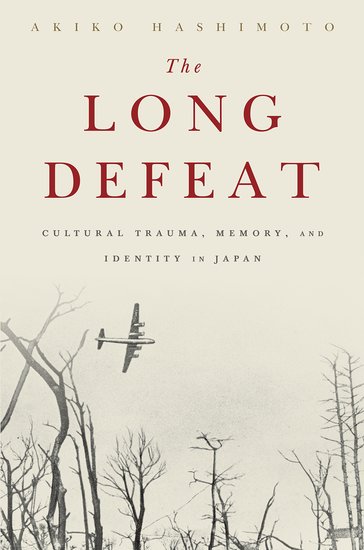
On Akiko Hashimoto's 'The Long Defeat'
Akiko Hashimoto's book offers a very good overview of Japanese attempts both of politicians and civilians to understand their role in the second world war, and since then.
Hashimoto covers the main political debates between pacifists, nationalists, and reconciliationists, as she divides the calls her groupings of the main approaches. These distinctions are someties oversimplified, but there are plenty of details and careful references, so anyone can strike out and make up their own mind about the issues discussed.
The last 30 pages of the book are in many respects the most interesting since Hashimoto reflects briefly on the post 2000 events up to 2014. It is too bad that she doesn't deal on more pages with the effects of Chinese and South-Korean nationalism, and the hatred against Japan stoked by Chinese and Korean (both North and South) governments. This is a phenomenon we have seen more of recently, and is used as a tool by the Chinese and Koreans to direct away attention from internal politics and economic problems, and their own issues with authoritarianism and human rights issues; and of course China uses this as an excuse for its own aggressive military expansion. These factors are becoming more and more important as China and both Koreas grow stronger, and turn many of the earlier fears of nationalist Japanese politicians into actual threats that Japan has to take seriously.
Of course these factors also complicate the picture of how Japan should relate to its own WWII role and validate that it should simply move on. Enough apologies have been offered, restitutions have been paid, and since WWII Japan is more peaceful and democratic than the large majority of its vocal critics, including China, the Koreas, and the US. Chinese and South-Korean politicians are utterly reluctant to admit the strenght of the Japanese peace-movements, the fact that their militaries are stronger or as strong as the Japanese, or that they are employing authoritarian, dictatoric means against their own citizens, as well as that they also have a violent history going back millenias. Until they use the conflicts with Japan for domestic political purposes in this way, the apology-politics should stop, the topic should be dropped, and a more forward looking vision crafted for Japan. Of course the horrible war crimes perpetrated by Japanese soldiers, leaders and sometimes even civilians have to be openly remembered. But they do not constitute the whole history of Japan, nor are they the only and main thing about the country around which its identity should be constructed.
This is perhaps my biggest point of disagreement with Hashimoto, who never challenges whether the relationship to Japan to its WWII role should be a central topic these days, and whether it should really be so important to the nation's identity (if there is such a thing at all). Surely there is more to Japan's history the tragic and guilty war years between, say roughly 1929-1945, and there is definitely more to it more than 70 years down the line. Since then Japan has been supporting other countries in their economic build-up, been a peaceful country, and evolved into a major welfare state conscious of the rights, interests, and wellbeing of its citizens. This cannot be said of the US which waged many wars and where the social network - which was always weak - hasn't developed properly, or China where an authoritarian regime is keeping its people cut off from the internet, occupied tibet, the north-eastern territories, and is punishing by torture, prisoning and force any serious organized dissent. The maniac focus on the issue of Japan's WWII role just seems to serve political interests of nationalist politicians in Japan, and the Chinese, Korean, Russian, and US military and political dilpomacy.
Akiko Hashimoto, The Long Defeat. 2015. New York: Oxford University Press.
Hashimoto covers the main political debates between pacifists, nationalists, and reconciliationists, as she divides the calls her groupings of the main approaches. These distinctions are someties oversimplified, but there are plenty of details and careful references, so anyone can strike out and make up their own mind about the issues discussed.
The last 30 pages of the book are in many respects the most interesting since Hashimoto reflects briefly on the post 2000 events up to 2014. It is too bad that she doesn't deal on more pages with the effects of Chinese and South-Korean nationalism, and the hatred against Japan stoked by Chinese and Korean (both North and South) governments. This is a phenomenon we have seen more of recently, and is used as a tool by the Chinese and Koreans to direct away attention from internal politics and economic problems, and their own issues with authoritarianism and human rights issues; and of course China uses this as an excuse for its own aggressive military expansion. These factors are becoming more and more important as China and both Koreas grow stronger, and turn many of the earlier fears of nationalist Japanese politicians into actual threats that Japan has to take seriously.
Of course these factors also complicate the picture of how Japan should relate to its own WWII role and validate that it should simply move on. Enough apologies have been offered, restitutions have been paid, and since WWII Japan is more peaceful and democratic than the large majority of its vocal critics, including China, the Koreas, and the US. Chinese and South-Korean politicians are utterly reluctant to admit the strenght of the Japanese peace-movements, the fact that their militaries are stronger or as strong as the Japanese, or that they are employing authoritarian, dictatoric means against their own citizens, as well as that they also have a violent history going back millenias. Until they use the conflicts with Japan for domestic political purposes in this way, the apology-politics should stop, the topic should be dropped, and a more forward looking vision crafted for Japan. Of course the horrible war crimes perpetrated by Japanese soldiers, leaders and sometimes even civilians have to be openly remembered. But they do not constitute the whole history of Japan, nor are they the only and main thing about the country around which its identity should be constructed.
This is perhaps my biggest point of disagreement with Hashimoto, who never challenges whether the relationship to Japan to its WWII role should be a central topic these days, and whether it should really be so important to the nation's identity (if there is such a thing at all). Surely there is more to Japan's history the tragic and guilty war years between, say roughly 1929-1945, and there is definitely more to it more than 70 years down the line. Since then Japan has been supporting other countries in their economic build-up, been a peaceful country, and evolved into a major welfare state conscious of the rights, interests, and wellbeing of its citizens. This cannot be said of the US which waged many wars and where the social network - which was always weak - hasn't developed properly, or China where an authoritarian regime is keeping its people cut off from the internet, occupied tibet, the north-eastern territories, and is punishing by torture, prisoning and force any serious organized dissent. The maniac focus on the issue of Japan's WWII role just seems to serve political interests of nationalist politicians in Japan, and the Chinese, Korean, Russian, and US military and political dilpomacy.
Akiko Hashimoto, The Long Defeat. 2015. New York: Oxford University Press.
Friday, 7 October 2016
Putin's nuclear threat to the West
It is a well known fact, publicized by Russian newspapers and confirmed by the Russian military, that Russia is regularly exercising and planning for the offensive use of nuclear weapons in Western Europe, as well against the US.
But then of course there are people who publish this and similar stuff on 9GAG and other social sites:

I think what this meme is expresses is perfectly right in one sense: no sane, average civilian wants to nuke any other country. The average Joe, Sara, Teju, or Zoltan wakes up, goes to work, cares and worries for and about her or his family, friends, kids, health, house, hobbies, interests, and job. No normal person wakes up and thinks: 'Oh, gosh, I sure hope today my country's military kills, debilitates, and ruins the lives of tens of thousands of foreigners!'
On the other hand it is not true that no Russian - or for that matter that no Chinese or US - higher ups entertain such ideas. And it is partly our duty as citizens of a given country to oust politicians, administrators, and military leaders who are willing to go down such ways. No other country's civilians can do that instead of us, and if we don't do it we can't blame anyone else. The average, normal people in Russia, China, and the US, and in other countries, have to ensure that their countries work properly. One has to engage with politics, most importantly READ about it serious books and papers not just internet crap, write about it, think about it, talk about it, and if needed go out to the streets, go to the parliament, stage protests, throw eggs at politicians and so on.
Elected people can go berserk, and elections can go wrong. We need to make sure that loonies such as Trump, or tyrants such a Putin, or his pet-wanna-be-dictator Orban don't get into power, and even if they do they don't get the license to do anything their whims drive them to.
UPDATE: This piece on the issue just confirms and supports with more references what I have been saying.
But then of course there are people who publish this and similar stuff on 9GAG and other social sites:
I think what this meme is expresses is perfectly right in one sense: no sane, average civilian wants to nuke any other country. The average Joe, Sara, Teju, or Zoltan wakes up, goes to work, cares and worries for and about her or his family, friends, kids, health, house, hobbies, interests, and job. No normal person wakes up and thinks: 'Oh, gosh, I sure hope today my country's military kills, debilitates, and ruins the lives of tens of thousands of foreigners!'
On the other hand it is not true that no Russian - or for that matter that no Chinese or US - higher ups entertain such ideas. And it is partly our duty as citizens of a given country to oust politicians, administrators, and military leaders who are willing to go down such ways. No other country's civilians can do that instead of us, and if we don't do it we can't blame anyone else. The average, normal people in Russia, China, and the US, and in other countries, have to ensure that their countries work properly. One has to engage with politics, most importantly READ about it serious books and papers not just internet crap, write about it, think about it, talk about it, and if needed go out to the streets, go to the parliament, stage protests, throw eggs at politicians and so on.
Elected people can go berserk, and elections can go wrong. We need to make sure that loonies such as Trump, or tyrants such a Putin, or his pet-wanna-be-dictator Orban don't get into power, and even if they do they don't get the license to do anything their whims drive them to.
UPDATE: This piece on the issue just confirms and supports with more references what I have been saying.
Wednesday, 5 October 2016
Worrying amount of Russian political misinformation on the internet
Recently I have noticed that several posts in major newspapers (Chinese, German, Japanese, UK, US) have comments written by people with VERY-American or British or German etc. names. At least their accounts look as if they were natives of these countries. Usually these comment-writers pose as man around 40 or 50, who are confident, obviously well informed and in-the-know. They bash what reliable news agencies and independent writers say, and push very forcefully a narrative heavily leaning towards Russia and/or China. In these narratives the US and the EU are always the bad guys, who treat poor Russia and China badly, and are unfair, and start wars everywhere (or finance the wars and make a good buck on them). According to these narratives all these wars started were totally unnecessary and self-serving, and Russia and China are peaceful giants, who would never do the same.
Of course this is total rubbish. It is total rubbish not because the US and the EU are not involved in arms trading or they don't start/finance/participate in wars. But it is total rubbish because the motivations for going to wars are usually a lot more complicated than simply aiming at monetary and territorial gains. And it is also total rubbish because many of these wars are about countering aggressive push by Chinese and Russian armed forces, secret services, or military units.
It is enough to think of the Ukraine: the EU did offer the Ukraine the chance to start the process to become a member state. But it did not attack Russia nor did it threaten it with that. Nor did it occupy the Ukraine. The then-Prime Minister of Ukraine was not forced to agree to this; it was Russia who twisted his arm to back out of the deal. It is easy to see who was the aggressor here, and then Russia aggravated things by pushing into the Ukraine by military force.
Consider also North-Korea, who have pushed the speed of their military missiles development programmes up to maximum. This has taken both South-Korea and Japan by surprise, and both states need to quickly up their defenses. They are at the same time constrained from doing so by contracts enforced on them by the US, and by the aggressive diplomacy of China. China thinks all military development is justified for them, while their neighbours should just sit with their hands crossed in their laps. Whereas any sane country that is the neighbour of a superpower needs a normal, up-to date military. This need is now made even more stringent and urgent by North-Korea's recently upgraded striking capabilities. Now, North-Korea has surely not achieved these striking technological breakthroughs suddenly on its own merit. Either China and/or Russia had to finance and probably support their projects with money, technology and expertise.
Add to this Russia's role in Syria, where it first vetoed all attempts at intervention, letting several millions civilians become displaced, and tens of thousands get killed, only so that its strongman ally leader can stay in power. Then when interventions begone Russia entered into contracts with the US and allies, but refused to stick to those contracts and bombed civilians and those it was supposed to support.
At the same time China is trying to gobble down the whole South-China sea, unilaterally. This incorporates waters well in the economic interests zones and reasonably assigned self-defense zones of several other countries. China is also building up artificial military islands in the region. Surely not the most peaceful move.
In light of all this, it is easy to see that the narratives of the apologists don't add up. It is also well known that there are plenty of government sponsored trolls spreading such news. The funny bit is when one gets into a debate with them and assumes a reasonable, true-to-the-facts-but-open-to-new-evidence approach they take off. They don't stay and engage in substantial debates and conversations. They are only interested in swaying the opinions of people who are dumb enough to think of politics in terms of Good and Bad, and who are willing to force this two dimensional straight-jacket view on current affairs and cast the US or Europe in the role of evil perpetrator.
Of course this is total rubbish. It is total rubbish not because the US and the EU are not involved in arms trading or they don't start/finance/participate in wars. But it is total rubbish because the motivations for going to wars are usually a lot more complicated than simply aiming at monetary and territorial gains. And it is also total rubbish because many of these wars are about countering aggressive push by Chinese and Russian armed forces, secret services, or military units.
It is enough to think of the Ukraine: the EU did offer the Ukraine the chance to start the process to become a member state. But it did not attack Russia nor did it threaten it with that. Nor did it occupy the Ukraine. The then-Prime Minister of Ukraine was not forced to agree to this; it was Russia who twisted his arm to back out of the deal. It is easy to see who was the aggressor here, and then Russia aggravated things by pushing into the Ukraine by military force.
Consider also North-Korea, who have pushed the speed of their military missiles development programmes up to maximum. This has taken both South-Korea and Japan by surprise, and both states need to quickly up their defenses. They are at the same time constrained from doing so by contracts enforced on them by the US, and by the aggressive diplomacy of China. China thinks all military development is justified for them, while their neighbours should just sit with their hands crossed in their laps. Whereas any sane country that is the neighbour of a superpower needs a normal, up-to date military. This need is now made even more stringent and urgent by North-Korea's recently upgraded striking capabilities. Now, North-Korea has surely not achieved these striking technological breakthroughs suddenly on its own merit. Either China and/or Russia had to finance and probably support their projects with money, technology and expertise.
Add to this Russia's role in Syria, where it first vetoed all attempts at intervention, letting several millions civilians become displaced, and tens of thousands get killed, only so that its strongman ally leader can stay in power. Then when interventions begone Russia entered into contracts with the US and allies, but refused to stick to those contracts and bombed civilians and those it was supposed to support.
At the same time China is trying to gobble down the whole South-China sea, unilaterally. This incorporates waters well in the economic interests zones and reasonably assigned self-defense zones of several other countries. China is also building up artificial military islands in the region. Surely not the most peaceful move.
In light of all this, it is easy to see that the narratives of the apologists don't add up. It is also well known that there are plenty of government sponsored trolls spreading such news. The funny bit is when one gets into a debate with them and assumes a reasonable, true-to-the-facts-but-open-to-new-evidence approach they take off. They don't stay and engage in substantial debates and conversations. They are only interested in swaying the opinions of people who are dumb enough to think of politics in terms of Good and Bad, and who are willing to force this two dimensional straight-jacket view on current affairs and cast the US or Europe in the role of evil perpetrator.
Sunday, 2 October 2016
Ogura Kazuo's 'Japan's Asian Diplomacy
As part of my self-education I'm reading a good deal on Japan, China, and East-Asia in general. The last book that I got in my hand was Ogura Kazuo's Japan's Asian Diplomacy. The author served as Japan's ambassador to Vietnam, France, and Korea.
It quickly becomes obvious from the book that Ogura has plenty of insight into the main ideological and political currents shaping the broader agenda of foreign policy making in Japan, China, and Korea. He offers a historical, ideological, and political overview of Japan's relations with its neighbours going back to the early middle ages, and shows that in most cases the Japanese policies and stances were heavily influenced by internal political interests and leadership contests. In many places in the book he is openly critical about such short sighted diplomacy, and makes an effort to show that in many cases taking a too hard line in domestic politics forced the leadership into a position where to save face it was almost necessary to act aggressively on the international place - to live up to the expectations raised in the public, so to say.
The author was not afraid to point out some harmful and aggressive long standing tendencies of Japanese policies - such as treating the affairs of Korea almost as an internal issue requiring constant intervention - and the lack of long term vision in the building up of relations with China.
The book also offers a very interesting perspective on how the Tokugawa shogunate's closed-door policy served to prepare Japan to see itself ideologically and politically among the Western, colonizing, powers very soon after the Meiji period. This amounted to a significant shift from the earlier Japano- or Sino-centric world views dominating political thinking. It also explains in part why Japan acted quickly and with no sympathy towards other Asian nations.
The book discusses several other issues, and it is a very interesting and thought-provoking reading. I don't have an in depth knowledge of either Japanese history or politics yet, but I'm happy that I took down this volume from the library shelf, and at the moment it seems that it will definitely contribute to my understanding of the Japanese perspectives on diplomacy in Asia.
It quickly becomes obvious from the book that Ogura has plenty of insight into the main ideological and political currents shaping the broader agenda of foreign policy making in Japan, China, and Korea. He offers a historical, ideological, and political overview of Japan's relations with its neighbours going back to the early middle ages, and shows that in most cases the Japanese policies and stances were heavily influenced by internal political interests and leadership contests. In many places in the book he is openly critical about such short sighted diplomacy, and makes an effort to show that in many cases taking a too hard line in domestic politics forced the leadership into a position where to save face it was almost necessary to act aggressively on the international place - to live up to the expectations raised in the public, so to say.
The author was not afraid to point out some harmful and aggressive long standing tendencies of Japanese policies - such as treating the affairs of Korea almost as an internal issue requiring constant intervention - and the lack of long term vision in the building up of relations with China.
The book also offers a very interesting perspective on how the Tokugawa shogunate's closed-door policy served to prepare Japan to see itself ideologically and politically among the Western, colonizing, powers very soon after the Meiji period. This amounted to a significant shift from the earlier Japano- or Sino-centric world views dominating political thinking. It also explains in part why Japan acted quickly and with no sympathy towards other Asian nations.
The book discusses several other issues, and it is a very interesting and thought-provoking reading. I don't have an in depth knowledge of either Japanese history or politics yet, but I'm happy that I took down this volume from the library shelf, and at the moment it seems that it will definitely contribute to my understanding of the Japanese perspectives on diplomacy in Asia.
Tuesday, 27 September 2016
Shen Congwen's 'Border Town'
Shen Congwen's book Border Town is hard to pin down as a foreign reader who is mostly comfortable with Western literature. The book itself seems to echo some trends in 18th century European continental literature which idealized and depicted peasants patronizingly as 'simple folks who have a good heart'. Congwen's book is similar in that it ignores all social, political, economic or military dimensions of the story told.
Still, this seems to be a conscious and deliberate decision of the author, and done so that the main focus remains strictly on a simple and straightforward story of growing up, losing the ones we love, and experiencing longing and romantic love for the first time.
The book is excellent on this psychological level. It doesn't dive deep into the personal, consciously experienced thoughts and emotions of the characters, but it does highlight some of their main worries and thoughts, and gives the reader a good sense of how they feel and think by talking about their behaviour.
Cuicui and her grandpa offer a touching and sad pair, but one that is not heartbreaking: we all have to go through similar things in our lives, as we are all more or less powerless in the face of loss, passion, growing up. Cuicui is confused about the changes in herself, her grandfathers' behaviour towards her, and her feelings. And her grandfather despairs over how to secure the future happiness of his beloved and treasured granddaughter.
The grandpa departs during a very symbolic storm followed by a flood. The elements cannot be stopped, just as the old man's life cannot be extended forever. Nature has no respect and patience for the personal troubles of the pair. At the end of the novel Cuicui stands alone in life, and her supportive and caring community tries to nudge her towards growing up. Unable to move on quickly after her grandfather's loss she stays put, and with the assistance of an old friend of her grandfather's she continues to live in the same way as before. The fact that life cannot be easily controlled seems only to strengthen her attachment to what she holds dear - the way of life and place that she loved.
Still, this seems to be a conscious and deliberate decision of the author, and done so that the main focus remains strictly on a simple and straightforward story of growing up, losing the ones we love, and experiencing longing and romantic love for the first time.
The book is excellent on this psychological level. It doesn't dive deep into the personal, consciously experienced thoughts and emotions of the characters, but it does highlight some of their main worries and thoughts, and gives the reader a good sense of how they feel and think by talking about their behaviour.
Cuicui and her grandpa offer a touching and sad pair, but one that is not heartbreaking: we all have to go through similar things in our lives, as we are all more or less powerless in the face of loss, passion, growing up. Cuicui is confused about the changes in herself, her grandfathers' behaviour towards her, and her feelings. And her grandfather despairs over how to secure the future happiness of his beloved and treasured granddaughter.
The grandpa departs during a very symbolic storm followed by a flood. The elements cannot be stopped, just as the old man's life cannot be extended forever. Nature has no respect and patience for the personal troubles of the pair. At the end of the novel Cuicui stands alone in life, and her supportive and caring community tries to nudge her towards growing up. Unable to move on quickly after her grandfather's loss she stays put, and with the assistance of an old friend of her grandfather's she continues to live in the same way as before. The fact that life cannot be easily controlled seems only to strengthen her attachment to what she holds dear - the way of life and place that she loved.
Tuesday, 9 August 2016
The Chinese government's concerted PR and military strategy
The Chinese media, war, and economic machine is working because many talented people work in a concerted and devoted manner. This seems to be something that Japan and the US understand but Europe - and especially the UK voting for Brexit - fails to grasp.
China is now not only the second biggest economy of the world but also has one of the most powerful armys and it is not afraid to rely on it to put pressure on business partners and neighbours, as well as countries far from its waters.
The country's highest leadership also understands how important good PR work is and is not shy when having to spend on journalists, internet commenters, academics, diplomats, and even foreign specialists to defend its interests and emphasize a narrative which shows China in a good light.
The true face of the country's current leadership is easy to decipher: it is a hawkish, aggressive band, bent on gaining more power and territory. The current military and party leadership of China won't be a good friend of the UK just because they offer them a decent reciprocal trade pact. In fact, what the UK largely fails to admit is that is has historically played the largest role in the plundering of China during the second half of the 19th century and this isn't forgotten by the Chinese. If the British Empire hadn't forced concessions in several ports and wouldn't have highlighted the weakness of the imperial system in China, the demise of that system could have been slower and more peaceful. Also, other states like the Russian, the Americans, the French, the Dutch, the Germans and the Japanese - who all held concessions and were present with their military - would have had a much harder time in China. Not to mention that the Japanese incursions in the 1920s and 1930s would have likely been impossible.
You can read a great description of government sanctioned tabloid activity, covering the Global Times, here in the Quartz. It shows that the Chinese government keeps the public opinion in China under close control. People are forced to think what the government wants them to think because they don't have free access to impartial information, nor to any criticism of the system.
What I write is also confirmed by the Chinese government's insistence after Brexit to have an even larger access to sensitive technology and energy sectors in the UK. A good example is the Chinese ambassadors address over the Hinkley Point nuclear development. Such smaller and medium sized countries like the UK on its own will be more easily influenced and bought by China in the future. That is one of the reasons why the Brexit decision was disastrous. The UK is already home to many shadowy Russian operations. Now it might become the dwelling of characters who want to strike in the middle of Europe, but were repelled so far by the EU's common foreign policies.
Another example of how even Chinese academics - who are no doubt intelligent and very capable professional researchers - can be recruited by the government and military leadership is a paper by Dr. Xue Li and Xu Yanzhuo in the Diplomat. They warm up the misty-cloudy suggestion designed to deceive that China has been misunderstood, it is a peaceful growing giant, following Buddhist and Taoist teachings when making decisions. This is as false as it can be, as has been evidenced by China's behavior in Tibet, in north-west China, and when cracking down on thousands of protests and demonstrations. It is also obvious that this is false, when we take a look at the way Chinese diplomacy handles the South-China issue, and how the military is now trying to raise the pressure in the East-China sea.
Update in 2018 August: Now that Xi is on the top until his death China has sadly returned to a capitalist-emperor system. Trump and Putin are dreaming of the same, Erdogan has achieved the same, and Orban is dreaming of it. If the country's economy keeps growing as it is now, there won't be any stopping the military-diplomatic bulldozer.
China is now not only the second biggest economy of the world but also has one of the most powerful armys and it is not afraid to rely on it to put pressure on business partners and neighbours, as well as countries far from its waters.
The country's highest leadership also understands how important good PR work is and is not shy when having to spend on journalists, internet commenters, academics, diplomats, and even foreign specialists to defend its interests and emphasize a narrative which shows China in a good light.
The true face of the country's current leadership is easy to decipher: it is a hawkish, aggressive band, bent on gaining more power and territory. The current military and party leadership of China won't be a good friend of the UK just because they offer them a decent reciprocal trade pact. In fact, what the UK largely fails to admit is that is has historically played the largest role in the plundering of China during the second half of the 19th century and this isn't forgotten by the Chinese. If the British Empire hadn't forced concessions in several ports and wouldn't have highlighted the weakness of the imperial system in China, the demise of that system could have been slower and more peaceful. Also, other states like the Russian, the Americans, the French, the Dutch, the Germans and the Japanese - who all held concessions and were present with their military - would have had a much harder time in China. Not to mention that the Japanese incursions in the 1920s and 1930s would have likely been impossible.
You can read a great description of government sanctioned tabloid activity, covering the Global Times, here in the Quartz. It shows that the Chinese government keeps the public opinion in China under close control. People are forced to think what the government wants them to think because they don't have free access to impartial information, nor to any criticism of the system.
What I write is also confirmed by the Chinese government's insistence after Brexit to have an even larger access to sensitive technology and energy sectors in the UK. A good example is the Chinese ambassadors address over the Hinkley Point nuclear development. Such smaller and medium sized countries like the UK on its own will be more easily influenced and bought by China in the future. That is one of the reasons why the Brexit decision was disastrous. The UK is already home to many shadowy Russian operations. Now it might become the dwelling of characters who want to strike in the middle of Europe, but were repelled so far by the EU's common foreign policies.
Another example of how even Chinese academics - who are no doubt intelligent and very capable professional researchers - can be recruited by the government and military leadership is a paper by Dr. Xue Li and Xu Yanzhuo in the Diplomat. They warm up the misty-cloudy suggestion designed to deceive that China has been misunderstood, it is a peaceful growing giant, following Buddhist and Taoist teachings when making decisions. This is as false as it can be, as has been evidenced by China's behavior in Tibet, in north-west China, and when cracking down on thousands of protests and demonstrations. It is also obvious that this is false, when we take a look at the way Chinese diplomacy handles the South-China issue, and how the military is now trying to raise the pressure in the East-China sea.
Update in 2018 August: Now that Xi is on the top until his death China has sadly returned to a capitalist-emperor system. Trump and Putin are dreaming of the same, Erdogan has achieved the same, and Orban is dreaming of it. If the country's economy keeps growing as it is now, there won't be any stopping the military-diplomatic bulldozer.
Sunday, 29 May 2016
On the road back to feudalism
There is a gruesome trend we can observe: economic inequality is starkly on the rise in every country on Earth and fundamentalist, radical parties are gaining more and more following.
Just one example of the many horrors to which this leads is the fact that ISIS is now holding 50000 civilians hostage. They are ready to do anything they can to preserve their power. That means, they are ready to kill 50000 non-combatant innocent civilians to cause the enemy to suffer heavier losses. Why would anyone want a power like ISIS to rule over themselves? Why would anyone support an organization that is willing to sacrifice so many people in such a horrible way?
Many of those people in Fallujah will lose their father, mother, children, sister and brothers. Many of them will burn alive, will be shot, will blow into pieces, will be reduced to bloody blobs, will suffer horrible agonizing slow deaths, will be handicapped for the rest of their lives, will suffer incredible traumas. Who wants that? Who supports such a power?
We see far-right leaning nationalist dictators and autocrats on the rise elsewhere too: just consider Putin's new solidified might in Russia, Trump's candidacy and his atrocious way of thinking, Orban in Hungary where he is bartering with the Russians to get into a position where he can get away with corruption in the EU, or Xin's iron-fisted rule in China.
The serious problem is that Russia, the US, China, and even tiny Hungary, have better organized systems of rule and military in place than ISIS. These are solid nation states. That means that if the wrong people get in power they can become even more dangerous, as we can see this in the case of the Chinese party's rule in China. Censorship is extremely strong, most people are fed government designed news, they don't have access to critical voices, there is no option to changing and ousting people from the rule who are not doing well and not acting in the interests of their people.
We see clearly that economic inequality is on the rise globally. The rich are in control of more and more land, more and more companies, and have massive clout and powerful tools to pressure and influence governments.
Add to this that in the EU and the US many are turning back towards a repressive and outdated - not to mention factually wrong - religious fundamentalism.
It is almost as is if we would be on the way back to Feudalism, where the rich landowners own the lands of their vassals who in change serve them, and also own the land and means by which the rest of us can work. They command armies, and are only responsible towards themselves.
Just one example of the many horrors to which this leads is the fact that ISIS is now holding 50000 civilians hostage. They are ready to do anything they can to preserve their power. That means, they are ready to kill 50000 non-combatant innocent civilians to cause the enemy to suffer heavier losses. Why would anyone want a power like ISIS to rule over themselves? Why would anyone support an organization that is willing to sacrifice so many people in such a horrible way?
Many of those people in Fallujah will lose their father, mother, children, sister and brothers. Many of them will burn alive, will be shot, will blow into pieces, will be reduced to bloody blobs, will suffer horrible agonizing slow deaths, will be handicapped for the rest of their lives, will suffer incredible traumas. Who wants that? Who supports such a power?
We see far-right leaning nationalist dictators and autocrats on the rise elsewhere too: just consider Putin's new solidified might in Russia, Trump's candidacy and his atrocious way of thinking, Orban in Hungary where he is bartering with the Russians to get into a position where he can get away with corruption in the EU, or Xin's iron-fisted rule in China.
The serious problem is that Russia, the US, China, and even tiny Hungary, have better organized systems of rule and military in place than ISIS. These are solid nation states. That means that if the wrong people get in power they can become even more dangerous, as we can see this in the case of the Chinese party's rule in China. Censorship is extremely strong, most people are fed government designed news, they don't have access to critical voices, there is no option to changing and ousting people from the rule who are not doing well and not acting in the interests of their people.
We see clearly that economic inequality is on the rise globally. The rich are in control of more and more land, more and more companies, and have massive clout and powerful tools to pressure and influence governments.
Add to this that in the EU and the US many are turning back towards a repressive and outdated - not to mention factually wrong - religious fundamentalism.
It is almost as is if we would be on the way back to Feudalism, where the rich landowners own the lands of their vassals who in change serve them, and also own the land and means by which the rest of us can work. They command armies, and are only responsible towards themselves.
Wednesday, 4 May 2016
Chinese government diplomacy and rhetorics
I love articles like these. Chinese Premier Li told Japanese Foreign Minister Kishida that the Japanese side should stick to the
path of peaceful development, and match deeds with its words that
China's peaceful development is an opportunity.
This is a rhetorical game the Chinese government plays every single time it is possible: it relies on the ignorance of most people about China's current power, and on the strong memory of the Japanese occupation of Chinese territories. Never mind that the occupation was more than 70 years ago, by a different political system that does not exists in Japan anymore, and that subsequent governments have apologized for it several times. Most people don't know these things and the Chinese PR specialists understand and use this fact to bend the truth the way it suits their bosses best.
Think also of the adjective 'peaceful'. China is one of the few countries which has actually annexed other independent countries and territories to itself since WWII. Tibet, the North-Eastern territories, and some other smaller areas are occupied by it. It is rapidly building military centers in the South-China Sea, it opposes the independence of Taiwan, and is already attacking all democratic institutions on Hong Kong. China's military spending now is second after the US, and has been continuously rising year by year. It is developing its own fighter jets, aircraft carriers, tanks, special advanced weapon systems, and has the capacity to destroy orbiting satellites. The government suppresses thousands of protests every year. It is still regular in China for people to disappear, to be bullied and even imprisoned for having different views from high ranking party members. This country claims to be peaceful.
The funniest bit is that the Chinese government's members and puppets always accuse Japan of aggression. While Japan committed war crimes during WWII, and did occupy several countries, it lost the war, was occupied for seven years itself, and has since been one of the most peaceful countries in the world, only maintaining self-defence forces until last summer. No countries invaded.
Successive Japanese governments, private people, researchers, and public figures have apologized several times for the crimes committed by a long ago gone Japanese government and a long ago gone army. Japan invested heavily in the rebuilding of China, and much of China's industrial capacity and economic ability has to be thanked for to Japan.
Just two further things to notice: I think Japan, and everyone else whose money China is growing on - Europe, the US, Australia, etc. - do see opportunity in the peaceful growth of China. But nobody sees an opportunity in the growth of an aggressive bully. This will of course hit worst the normal, working average Chinese citizens: their government is gambling with their security and good lives. The average person in China is like anywhere else: they care about job security, family, kids, education, health, friends, fun, and so on. The Chinese government is the culprit and has to be checked by collective action, now.
In light of all this, I don't think a single word of the Chinese government can be taken to mean literally what it does. The call for respect and peacefulness is basically a threat. A threat, that if other countries don't comply with their demands they will push in non-peaceful ways. This has to be seen as a real issue and treated as such.
This is a rhetorical game the Chinese government plays every single time it is possible: it relies on the ignorance of most people about China's current power, and on the strong memory of the Japanese occupation of Chinese territories. Never mind that the occupation was more than 70 years ago, by a different political system that does not exists in Japan anymore, and that subsequent governments have apologized for it several times. Most people don't know these things and the Chinese PR specialists understand and use this fact to bend the truth the way it suits their bosses best.
Think also of the adjective 'peaceful'. China is one of the few countries which has actually annexed other independent countries and territories to itself since WWII. Tibet, the North-Eastern territories, and some other smaller areas are occupied by it. It is rapidly building military centers in the South-China Sea, it opposes the independence of Taiwan, and is already attacking all democratic institutions on Hong Kong. China's military spending now is second after the US, and has been continuously rising year by year. It is developing its own fighter jets, aircraft carriers, tanks, special advanced weapon systems, and has the capacity to destroy orbiting satellites. The government suppresses thousands of protests every year. It is still regular in China for people to disappear, to be bullied and even imprisoned for having different views from high ranking party members. This country claims to be peaceful.
The funniest bit is that the Chinese government's members and puppets always accuse Japan of aggression. While Japan committed war crimes during WWII, and did occupy several countries, it lost the war, was occupied for seven years itself, and has since been one of the most peaceful countries in the world, only maintaining self-defence forces until last summer. No countries invaded.
Successive Japanese governments, private people, researchers, and public figures have apologized several times for the crimes committed by a long ago gone Japanese government and a long ago gone army. Japan invested heavily in the rebuilding of China, and much of China's industrial capacity and economic ability has to be thanked for to Japan.
Just two further things to notice: I think Japan, and everyone else whose money China is growing on - Europe, the US, Australia, etc. - do see opportunity in the peaceful growth of China. But nobody sees an opportunity in the growth of an aggressive bully. This will of course hit worst the normal, working average Chinese citizens: their government is gambling with their security and good lives. The average person in China is like anywhere else: they care about job security, family, kids, education, health, friends, fun, and so on. The Chinese government is the culprit and has to be checked by collective action, now.
In light of all this, I don't think a single word of the Chinese government can be taken to mean literally what it does. The call for respect and peacefulness is basically a threat. A threat, that if other countries don't comply with their demands they will push in non-peaceful ways. This has to be seen as a real issue and treated as such.
Friday, 11 December 2015
Good ol' Chinese government is at it again
Lu Wei, the figure leading the Chinese government bodies responsible for internet censorship brought everyone to laugh - or to tears, depending on your mood - again, when he denied that there would be censorship of content in China. Instead, he spoke of management and claimed that the kind of content they don't allow Chinese users to access is content which would harm the interests of the people. Too bad the people themselves aren't allowed to decide what harms their interests and what is useful info. Maybe they would re-evaluate the performance of their government. That would be horrible for them, I'm sure.
Of course there is no censorship in China, who ever thought otherwise?
Read the full story at BoingBoing or at Hong Kong Free Press.
Of course there is no censorship in China, who ever thought otherwise?
Read the full story at BoingBoing or at Hong Kong Free Press.
Subscribe to:
Posts (Atom)