Trump tried to appear as if he would call the cards in the issues around North-Korea. But of course anyone worth their salt knows that the two Koreas, China, Russia and Japan are the main players on this one. In fact, mostly the two Koreas and China. The question is whether South-Korea is willing to change long-term strategy and integrate more into the East-Asian order, and accept the lead of China, in exchange for peace and more cooperation or even unification with North-Korea.
See this detailed, readable and clear analysis in Paste Magazine for more.
Showing posts with label South-Korea. Show all posts
Showing posts with label South-Korea. Show all posts
Tuesday, 21 August 2018

Wednesday, 9 November 2016
On the Trump presidency
Some articles (like this one in The Independent and this one in The Washington Post) mention two possibilities:
1. That Trump might not be as hot-headed and aggressive as he acted in his campaign, and that
2. a Trump presidency might be better for international military politics, because Trump said that he would be reluctant to wage wars if they are costly, or to defend allies if they don't pay towards their defense.
Both of these ideas are mistaken and there is no reason for hope and optimism.
With concern to 1.: The question is not whether Trump might be more sensible than the way he made himself look in his campaign. The question is if there is any good reason to think that is more sensible. There isn't. He was consistently haphazard, offensive, chaotic, unprepared, and unprofessional.
With concern to 2.: I've read in many places that Trump wants to talk to Putin and that is a good thing. Saying this makes it obvious that many - even intelligent - people believe that the U.S. administration and military is not maintaining constant close discussions on many topics with Russia. This is of course a false idea. Russia and the U.S. don't collide on many issues because they don't communicate.
Also, people who think that when Trump said he would talk with Russia that was a considered, serious thing haven't listened to his other ideas. He is just sputtering populist phrases. Whatever works at the moment. He knows as much about strategy, military issues, and economic competition with Russia as about other topics: next to nothing. As soon as he is seriously briefed and informed, if he even understands what he is being told, which is not sure, he might change his mind.
The same is the case concerning his ideas that the U.S. shouldn't offer defense arrangements for Japan, South-Korea and the Philippines. There are three enormous confusions here:
i) the U.S. does not offer defense. Japan had to accept that the U.S. military is stationed there at the end of the occupation following WWII. South-Korea had to accept the troops after the Korean war. The Philippines used to be a de facto U.S. colony. Also, Japan and South-Korea pay huge amounts towards the maintenance of the bases that the U.S. troops are using and towards the costs of the U.S. military.
Third, it is far from obvious that these countries really wanted the U.S. to station their troops there. That the U.S. is there ensures that these countries collide in their diplomacy with their other neighbours, Russia and China. If the U.S. troops would not be there these countries would have much more space for diplomatic manouvering and for looking out for their own interests. It is however part of the U.S. position that there can't be any powerful opponents on its borders. Canada and Mexico are no threats, across the Atlantic is a bloc of NATO countries, and Japan and South-Korea, as well as the Philippines form a big buffer zone between the U.S. and China. If the U.S. does not want to change its major defense policies it won't give up on these alliances.
Hence, there are no good reasons to be optimistic about Trump's presidency if he goes through with anything he has said.
1. That Trump might not be as hot-headed and aggressive as he acted in his campaign, and that
2. a Trump presidency might be better for international military politics, because Trump said that he would be reluctant to wage wars if they are costly, or to defend allies if they don't pay towards their defense.
Both of these ideas are mistaken and there is no reason for hope and optimism.
With concern to 1.: The question is not whether Trump might be more sensible than the way he made himself look in his campaign. The question is if there is any good reason to think that is more sensible. There isn't. He was consistently haphazard, offensive, chaotic, unprepared, and unprofessional.
With concern to 2.: I've read in many places that Trump wants to talk to Putin and that is a good thing. Saying this makes it obvious that many - even intelligent - people believe that the U.S. administration and military is not maintaining constant close discussions on many topics with Russia. This is of course a false idea. Russia and the U.S. don't collide on many issues because they don't communicate.
Also, people who think that when Trump said he would talk with Russia that was a considered, serious thing haven't listened to his other ideas. He is just sputtering populist phrases. Whatever works at the moment. He knows as much about strategy, military issues, and economic competition with Russia as about other topics: next to nothing. As soon as he is seriously briefed and informed, if he even understands what he is being told, which is not sure, he might change his mind.
The same is the case concerning his ideas that the U.S. shouldn't offer defense arrangements for Japan, South-Korea and the Philippines. There are three enormous confusions here:
i) the U.S. does not offer defense. Japan had to accept that the U.S. military is stationed there at the end of the occupation following WWII. South-Korea had to accept the troops after the Korean war. The Philippines used to be a de facto U.S. colony. Also, Japan and South-Korea pay huge amounts towards the maintenance of the bases that the U.S. troops are using and towards the costs of the U.S. military.
Third, it is far from obvious that these countries really wanted the U.S. to station their troops there. That the U.S. is there ensures that these countries collide in their diplomacy with their other neighbours, Russia and China. If the U.S. troops would not be there these countries would have much more space for diplomatic manouvering and for looking out for their own interests. It is however part of the U.S. position that there can't be any powerful opponents on its borders. Canada and Mexico are no threats, across the Atlantic is a bloc of NATO countries, and Japan and South-Korea, as well as the Philippines form a big buffer zone between the U.S. and China. If the U.S. does not want to change its major defense policies it won't give up on these alliances.
Hence, there are no good reasons to be optimistic about Trump's presidency if he goes through with anything he has said.
Saturday, 22 October 2016
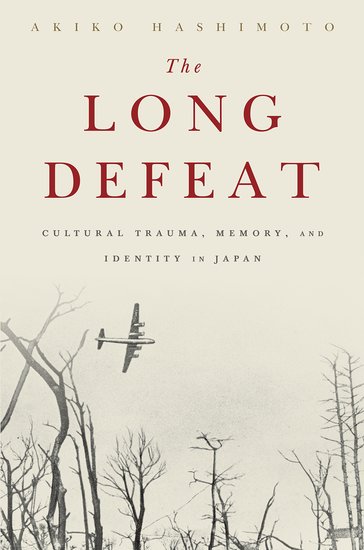
On Akiko Hashimoto's 'The Long Defeat'
Akiko Hashimoto's book offers a very good overview of Japanese attempts both of politicians and civilians to understand their role in the second world war, and since then.
Hashimoto covers the main political debates between pacifists, nationalists, and reconciliationists, as she divides the calls her groupings of the main approaches. These distinctions are someties oversimplified, but there are plenty of details and careful references, so anyone can strike out and make up their own mind about the issues discussed.
The last 30 pages of the book are in many respects the most interesting since Hashimoto reflects briefly on the post 2000 events up to 2014. It is too bad that she doesn't deal on more pages with the effects of Chinese and South-Korean nationalism, and the hatred against Japan stoked by Chinese and Korean (both North and South) governments. This is a phenomenon we have seen more of recently, and is used as a tool by the Chinese and Koreans to direct away attention from internal politics and economic problems, and their own issues with authoritarianism and human rights issues; and of course China uses this as an excuse for its own aggressive military expansion. These factors are becoming more and more important as China and both Koreas grow stronger, and turn many of the earlier fears of nationalist Japanese politicians into actual threats that Japan has to take seriously.
Of course these factors also complicate the picture of how Japan should relate to its own WWII role and validate that it should simply move on. Enough apologies have been offered, restitutions have been paid, and since WWII Japan is more peaceful and democratic than the large majority of its vocal critics, including China, the Koreas, and the US. Chinese and South-Korean politicians are utterly reluctant to admit the strenght of the Japanese peace-movements, the fact that their militaries are stronger or as strong as the Japanese, or that they are employing authoritarian, dictatoric means against their own citizens, as well as that they also have a violent history going back millenias. Until they use the conflicts with Japan for domestic political purposes in this way, the apology-politics should stop, the topic should be dropped, and a more forward looking vision crafted for Japan. Of course the horrible war crimes perpetrated by Japanese soldiers, leaders and sometimes even civilians have to be openly remembered. But they do not constitute the whole history of Japan, nor are they the only and main thing about the country around which its identity should be constructed.
This is perhaps my biggest point of disagreement with Hashimoto, who never challenges whether the relationship to Japan to its WWII role should be a central topic these days, and whether it should really be so important to the nation's identity (if there is such a thing at all). Surely there is more to Japan's history the tragic and guilty war years between, say roughly 1929-1945, and there is definitely more to it more than 70 years down the line. Since then Japan has been supporting other countries in their economic build-up, been a peaceful country, and evolved into a major welfare state conscious of the rights, interests, and wellbeing of its citizens. This cannot be said of the US which waged many wars and where the social network - which was always weak - hasn't developed properly, or China where an authoritarian regime is keeping its people cut off from the internet, occupied tibet, the north-eastern territories, and is punishing by torture, prisoning and force any serious organized dissent. The maniac focus on the issue of Japan's WWII role just seems to serve political interests of nationalist politicians in Japan, and the Chinese, Korean, Russian, and US military and political dilpomacy.
Akiko Hashimoto, The Long Defeat. 2015. New York: Oxford University Press.
Hashimoto covers the main political debates between pacifists, nationalists, and reconciliationists, as she divides the calls her groupings of the main approaches. These distinctions are someties oversimplified, but there are plenty of details and careful references, so anyone can strike out and make up their own mind about the issues discussed.
The last 30 pages of the book are in many respects the most interesting since Hashimoto reflects briefly on the post 2000 events up to 2014. It is too bad that she doesn't deal on more pages with the effects of Chinese and South-Korean nationalism, and the hatred against Japan stoked by Chinese and Korean (both North and South) governments. This is a phenomenon we have seen more of recently, and is used as a tool by the Chinese and Koreans to direct away attention from internal politics and economic problems, and their own issues with authoritarianism and human rights issues; and of course China uses this as an excuse for its own aggressive military expansion. These factors are becoming more and more important as China and both Koreas grow stronger, and turn many of the earlier fears of nationalist Japanese politicians into actual threats that Japan has to take seriously.
Of course these factors also complicate the picture of how Japan should relate to its own WWII role and validate that it should simply move on. Enough apologies have been offered, restitutions have been paid, and since WWII Japan is more peaceful and democratic than the large majority of its vocal critics, including China, the Koreas, and the US. Chinese and South-Korean politicians are utterly reluctant to admit the strenght of the Japanese peace-movements, the fact that their militaries are stronger or as strong as the Japanese, or that they are employing authoritarian, dictatoric means against their own citizens, as well as that they also have a violent history going back millenias. Until they use the conflicts with Japan for domestic political purposes in this way, the apology-politics should stop, the topic should be dropped, and a more forward looking vision crafted for Japan. Of course the horrible war crimes perpetrated by Japanese soldiers, leaders and sometimes even civilians have to be openly remembered. But they do not constitute the whole history of Japan, nor are they the only and main thing about the country around which its identity should be constructed.
This is perhaps my biggest point of disagreement with Hashimoto, who never challenges whether the relationship to Japan to its WWII role should be a central topic these days, and whether it should really be so important to the nation's identity (if there is such a thing at all). Surely there is more to Japan's history the tragic and guilty war years between, say roughly 1929-1945, and there is definitely more to it more than 70 years down the line. Since then Japan has been supporting other countries in their economic build-up, been a peaceful country, and evolved into a major welfare state conscious of the rights, interests, and wellbeing of its citizens. This cannot be said of the US which waged many wars and where the social network - which was always weak - hasn't developed properly, or China where an authoritarian regime is keeping its people cut off from the internet, occupied tibet, the north-eastern territories, and is punishing by torture, prisoning and force any serious organized dissent. The maniac focus on the issue of Japan's WWII role just seems to serve political interests of nationalist politicians in Japan, and the Chinese, Korean, Russian, and US military and political dilpomacy.
Akiko Hashimoto, The Long Defeat. 2015. New York: Oxford University Press.
Subscribe to:
Posts (Atom)